
An interview with Stacey Lugsdin, Hay NSW
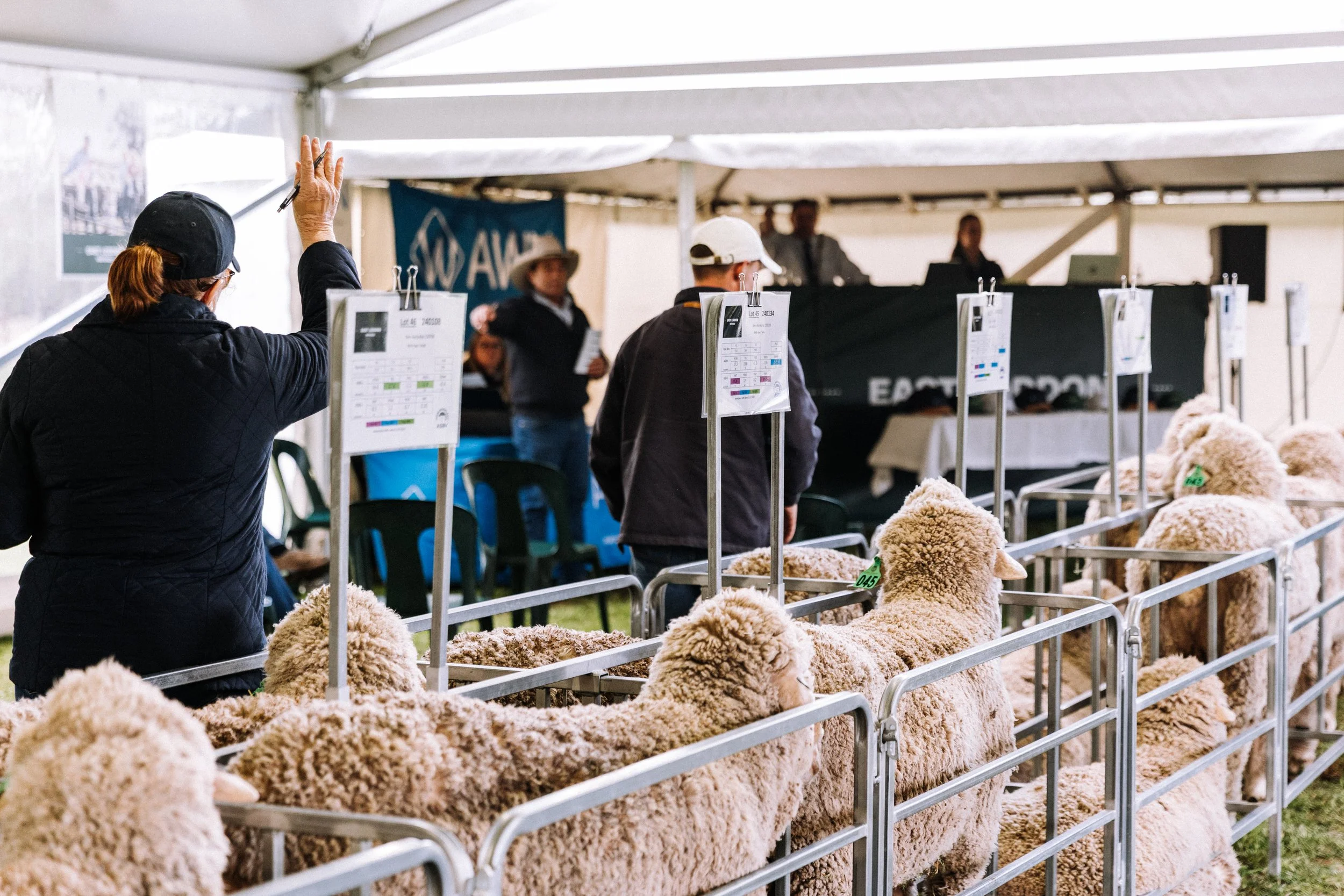
Stacey Lugsdin bidding at the 2025 East Loddon Ram sale
1. Introducing Warrendale Farm, Hay NSW.
Warrendale spans 7,300 hectares of open plains and cotton bush country in the south-west Riverina region of New South Wales. Located 45km north-east of Hay on the Mid Western Highway, the property also leases an adjoining 500-hectare paddock. Warrendale operates as a self-replacing Merino enterprise, with a strong focus on breeding productive ewes that consistently produce 20–21 micron, bold-crimping, long-stapled, stylish white fleeces. Sheep are shorn twice yearly, with lambs reared annually as part of a highly productive breeding program.
The Lugsdin family has a long and proud history in the Hay/Gunbar district, dating back to 1878. Warrendale has been owned by the family since 1947, when Max Lugsdin, one of six children, purchased the property as his own. Today, Warrendale is owned and operated by Ian Lugsdin, his wife Stacey, and their six children, all of whom have worked across the family’s businesses. Two of their daughters, Ellie and Annabel, have played a significant role in the property’s transition to EID adoption and data collection, helping drive continual improvement.
Warrendale began its EID journey in 2014, initially recording core wool production traits such as fleece weight and micron, alongside reproductive performance data including pregnancy scanning results. This information was captured and analysed using spreadsheets, allowing the business to make more informed decisions at an individual animal level rather than managing sheep solely as a mob. This approach has supported improved wool production, reproductive performance, and overall profitability by identifying highly productive animals and culling underperformers.
The operation started with basic EID equipment, including a handheld wand with keypad and entry-level software for data sorting and draft list setup. Today, Warrendale utilises multiple EID panel and wand readers, advanced software platforms, and auto-drafters, enabling selection and drafting across multiple traits with greater precision and efficiency.
Through Riverina Local Land Services, Warrendale has also participated in a Natural Capital Profiling pilot program, measuring land health and carbon output as part of a broader commitment to environmental sustainability.
2. How did your relationship with East Loddon begin?
In 2017, using our first genomic flock profile as a benchmark and after clearly defining our breeding objectives, we set out to find a local stud that aligned with our program. It was important to us that the stud not only collected robust data, but also shared similar breeding goals, wool type, and operated in country with comparable seasonal challenges. I still remember Annabel saying, “Don’t buy rams below your current flock profile.” That advice has stayed with me over the past eight years and continues to guide our decisions today. Every two years, we conduct a genomic flock profile on a random sample of 20–30 lambs to assess how our ram selections are driving ongoing genetic improvement.
Today, Tom Hooke emails us a spreadsheet with full ram data prior to the sale. We compare this information against our most recent flock profile and exclude any rams that do not meet our current benchmark before we even arrive. From there, we visually assess the shortlisted rams to ensure their constitution and structure meet our criteria. This process removes the guesswork from ram selection and allows us to confidently pursue genetic gain based on objective, data-driven traits.
3. You’ve worked with East Loddon for 8 years, what’s kept you coming back?
We continue to return to East Loddon for our ram purchases because we can clearly see the results in the genetic gains achieved across our flock, including improved wool length and weight, stronger carcass traits, higher lambing percentages, and reduced breech wrinkle, supporting a non-mulesed breeding program.
The Hooke family have been incredibly supportive throughout our journey. Tom knows our breeding objectives so well that he can often anticipate which rams we’ll be interested in before we even arrive at the sale. We value the strong alignment in our breeding goals, particularly the focus on wool length and weight, alongside the deliberate incorporation of carcass traits into our ewes and their progeny, traits that are often negatively correlated with wool. This balanced approach is key to producing a robust, fertile and commercially resilient ewe.
4. What does being “data-driven” actually mean for Warrendale Farm in practice?
Being data-driven means collectively using the information that we record, such as wool test results, hogget fleeceweights, breech wrinkle scores, flystrike incidence and pregnancy scan data to make informed, objective breeding decisions. This has allowed us to breed more productive and profitable individual sheep, which in turn allows us to improve our environmental and economic sustainability for future generations of our family.
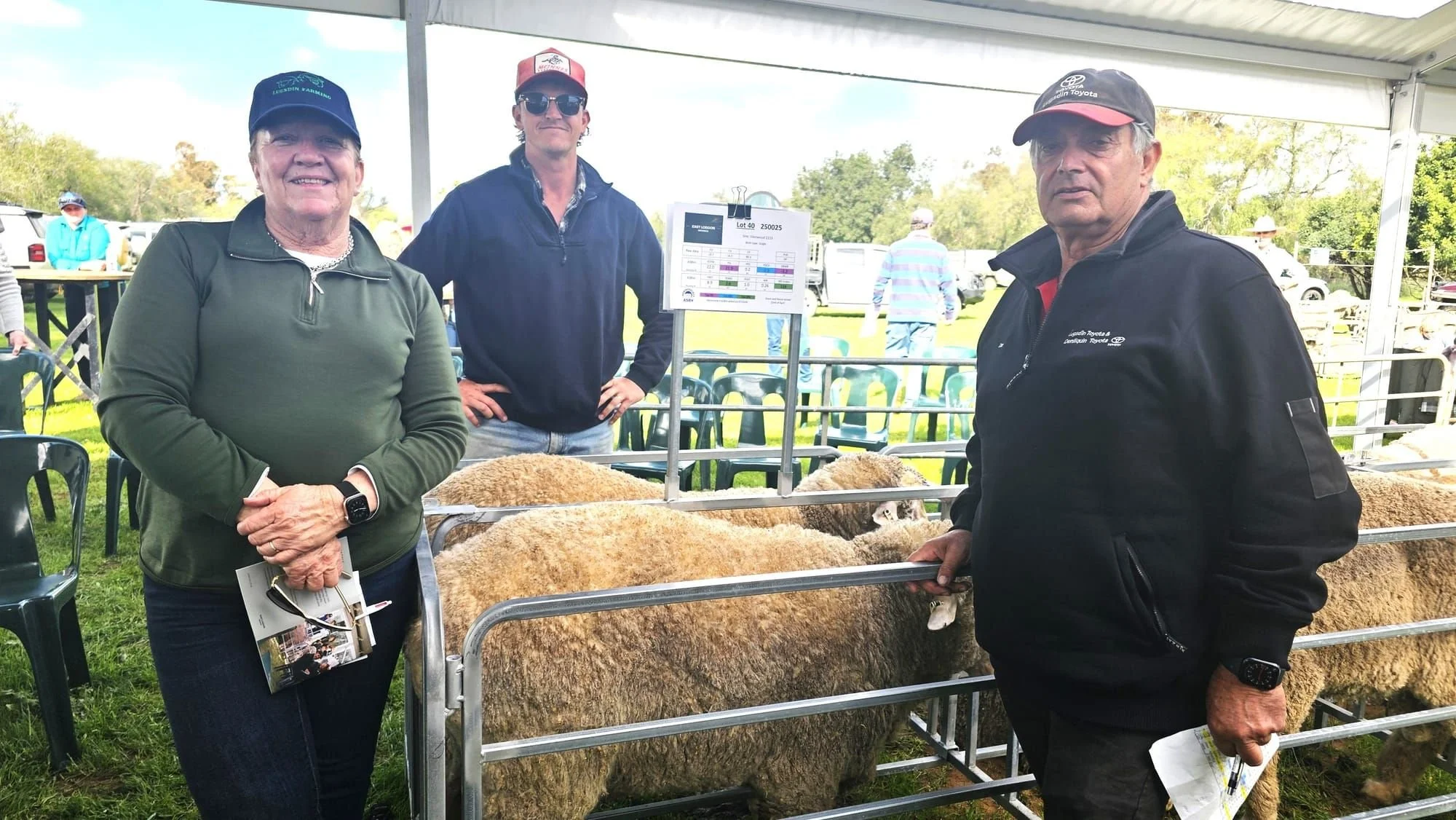
Stacey, Tom and Ian Lugsdin at the 2026 East Loddon Ram sale
5. What prompted you to start using genomics more seriously in your breeding decisions?
In 2016 there was an expression of interest by Sheep CRC to see if any producers would be interested in taking part in a trial undertaking Flock Profiles. My thoughts were this might be interesting, so I put my hand up. I was only just learning about ASBVs (Australian Sheep Breeding Values) and precision sheep management (managing sheep on an individual basis) using EID (Electronic Identification).
6. Can you explain what a genomic flock profile is, in simple terms?
A genomic flock profile is a report on where your flock potentially sits in relation to other sheep in the national database for traits that are important for productivity, profitability, animal welfare and sustainability. At lamb marking, a tissue sample is taken from a random sample of 20 lambs and sent off to the lab for testing, you will receive a report back on the ASBVs of your flock and their performance in percentile bands, compared to the national database for sheep of the same year. Depending on which of your breeding objectives you wish to improve, when selecting Rams you only buy those that are more favourable for that trait than benchmark profile.
7. What kind of on-farm data are you collecting, and how does it feed into your decisions?
On-farm data collection begins at lamb marking, where breech wrinkle scores are recorded for ewe lambs, along with any signs of excessive urine stain or dag. Lambs are weighed at weaning to capture bodyweight data, and an auto-drafter is used to remove ewe lambs with a wrinkle score of three or above. These animals are grown out and sold.
Prior to the first hogget shearing, pinbone wool samples are collected from all retained ewe hoggets and sent for fleece testing. This provides key wool quality data, including fibre diameter, comfort factor and curvature. At first shearing, fleece weights are recorded and any fleece defects noted. Using this information, ewe hoggets that fall outside our parameters for fibre diameter, comfort factor or fleece weight are drafted and transferred to a prime lamb operation at Birriwa.
Flystrike is closely monitored, with any lambs affected during the summer prior to hogget shearing recorded in the field using an EID reader and culled. Ewes requiring treatment are also recorded and removed, though this now occurs rarely. This disciplined approach ensures only the most productive, profitable and easy-care animals are retained in the breeding flock.
Additional data is collected at pregnancy scanning, including foetal counts, with empty ewes culled. At lamb marking, wet/dry status is recorded to identify lambing success and losses. This allows us to retain only ewes that consistently conceive, lamb and rear a lamb each year.
In 2017, our breeding program commenced with three core objectives: Yearling Clean Fleece Weight (YCFW), Yearling Fat (YFAT) and Yearling Eye Muscle Depth (YEMD). As wool and carcass traits are typically negatively correlated, identifying rams positive for all three traits was a key focus. Through East Loddon, we were able to source rams that delivered balanced genetic improvement across these objectives.
As confidence in the program grew, additional traits were introduced, including Yearling Staple Length (YSL) while maintaining or improving YCFW, with the aim of moving towards six-month shearing. Lower Early Breech Wrinkle (EBWR) was also prioritised to support a transition to a non-mulesed flock. Warrendale has been fully non-mulesed since 2019, with all sheep on the property now bred and managed accordingly.
8. How has having this data changed the way you select sires and plan your breeding program?
By using our most current flock profile as a benchmark and having clear breeding objectives, we can select Rams that will guarantee improvement.
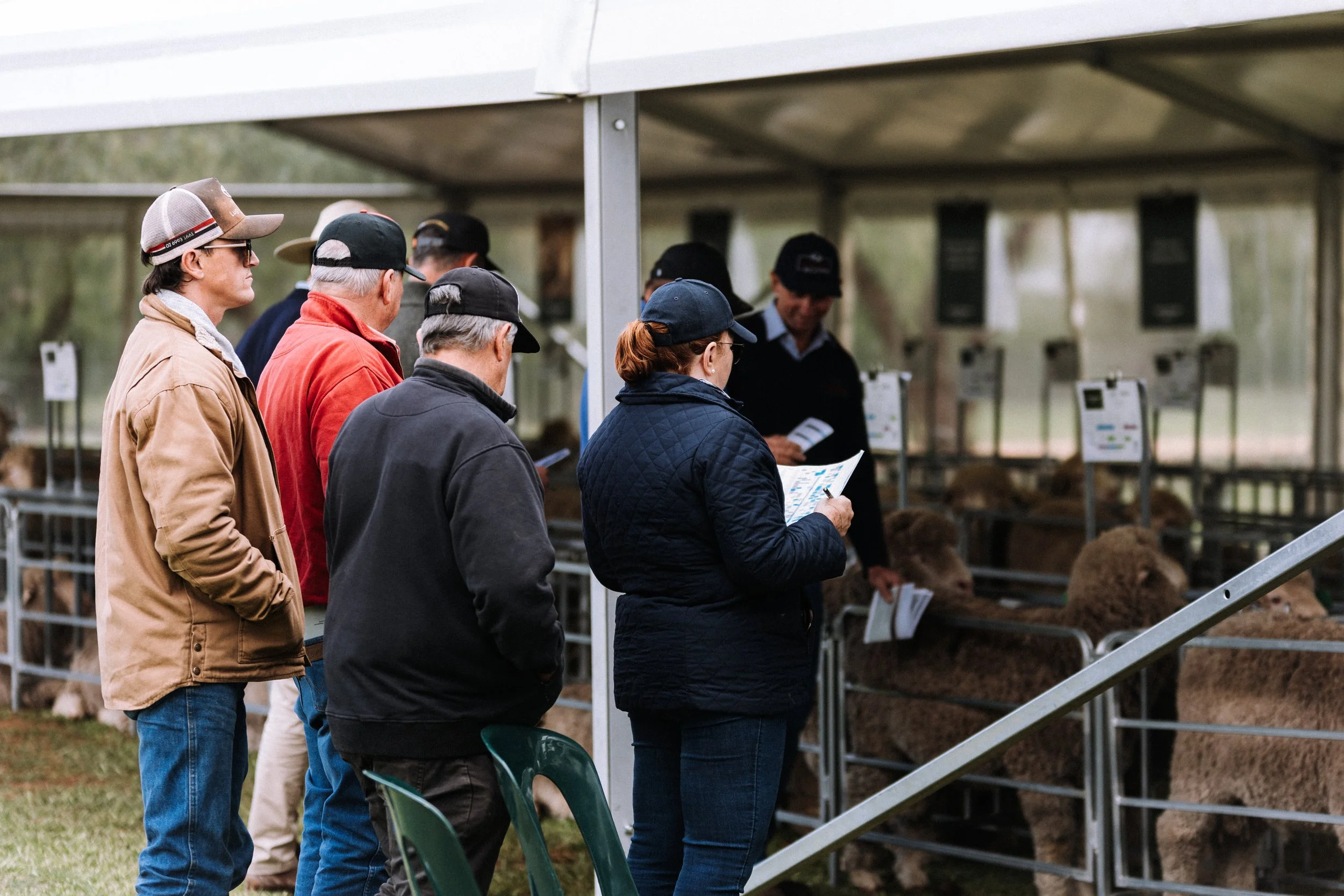
Tom, Ian and Stacey Lugsdin at the 2025 East Loddon Ram sale
9. What does “ongoing genetic gain” mean for you, what traits or outcomes are you most focused on improving?
Continuous improvement!
• An easy care, productive, ewe and progeny with the following traits.
• Excellent wool length and weight for wool income.
• Carcass traits such as eye muscle depth for resilience in times of dry conditions, requiring less supplementary feeding, especially in an extensive grazing environment.
• Maternal fat depth that the ewe passes onto the lamb for better lamb survivability. Visceral fat means resources for the lambs to draw down on if it takes them a bit longer to get up and have their first drink.
• Less wrinkle both around the breech and on the body, for easy care when non-mulesed.
10. What real improvements have you seen over time from this data + genomics approach?
We have seen the following real improvements:
• Increase in wool weight
• Increase in staple length
• Increase in lamb numbers
• Increase in more surplus sheep
• Increase in carcass traits for more saleable wethers
• Decrease in breech wrinkle, enabling a move to non-mulsed
11. What do East Loddon do differently that makes them valuable partners in your program?
East Loddon aligns closely with our own breeding objectives, which is a key reason we continue to work with them. They are continually improving their ram offering, and over recent years we’ve seen a noticeable increase in the number of rams with stronger, more competitive figures. Their program deliberately pushes both wool and carcass traits to produce a genuinely dual-purpose animal, while running rams under commercial conditions in an environment that closely mirrors the challenges faced by our own ewes. As a family-run operation, East Loddon also shares values we strongly relate to, creating a natural affinity and long-term partnership.
12. Looking ahead, what are your goals for the next few years and how will genomics continue to play a role?
Over the coming years, we will continue to undertake a genomic flock profile every two years, using this data to benchmark ram purchases and drive ongoing genetic improvement. Our focus remains on refining wool characteristics to produce a fibre the market wants, one with lower variability, improved processing predictability, and strong alignment with non-mulesed, ethical production standards valued by wool buyers. At the same time, we will continue to strengthen carcass traits to build more resilient generations of sheep. A key priority is maintaining the condition of our land and groundcover through individual sheep management, improving productivity per animal rather than increasing numbers to lift income. As part of this evolution, we may also begin incorporating emerging carcass traits such as Weaning Rate (WR) and Condition Score (CS) into our breeding objectives.
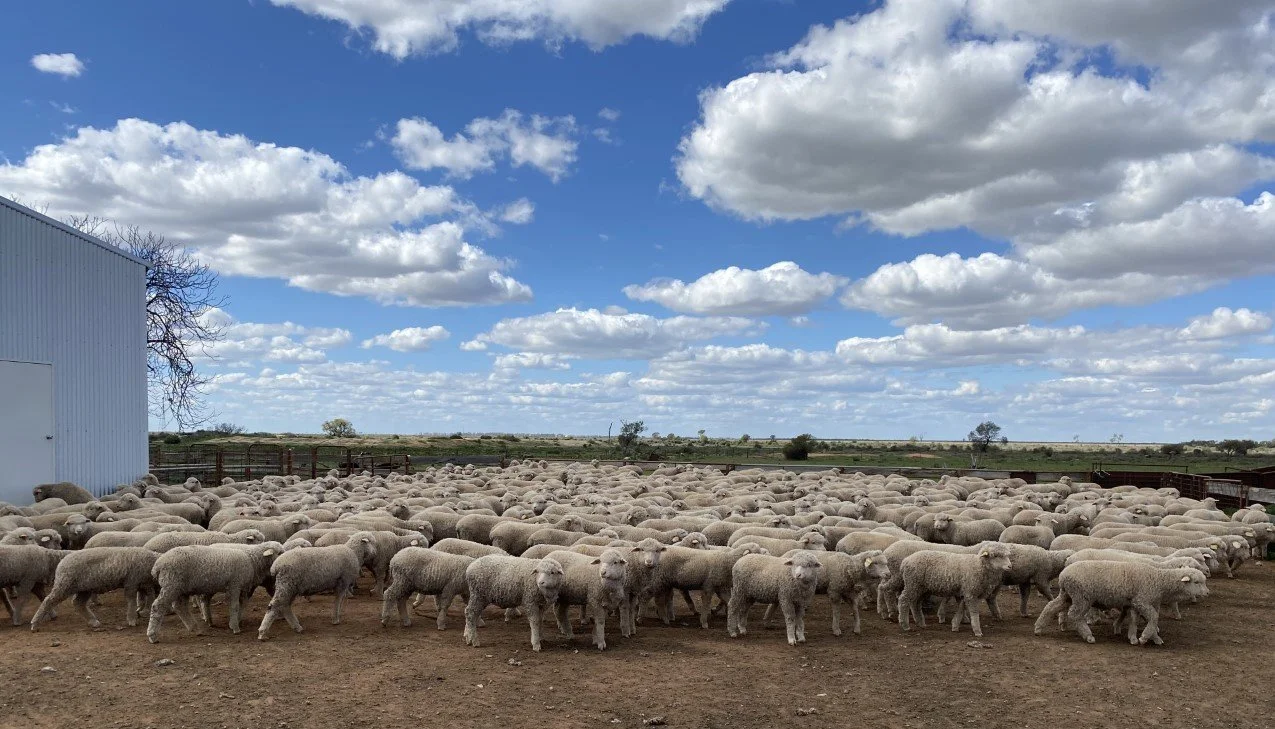
Yarded Merinos at ‘Warrendale’.