
An interview with Jo & Greg Bear, Bear & Twigg
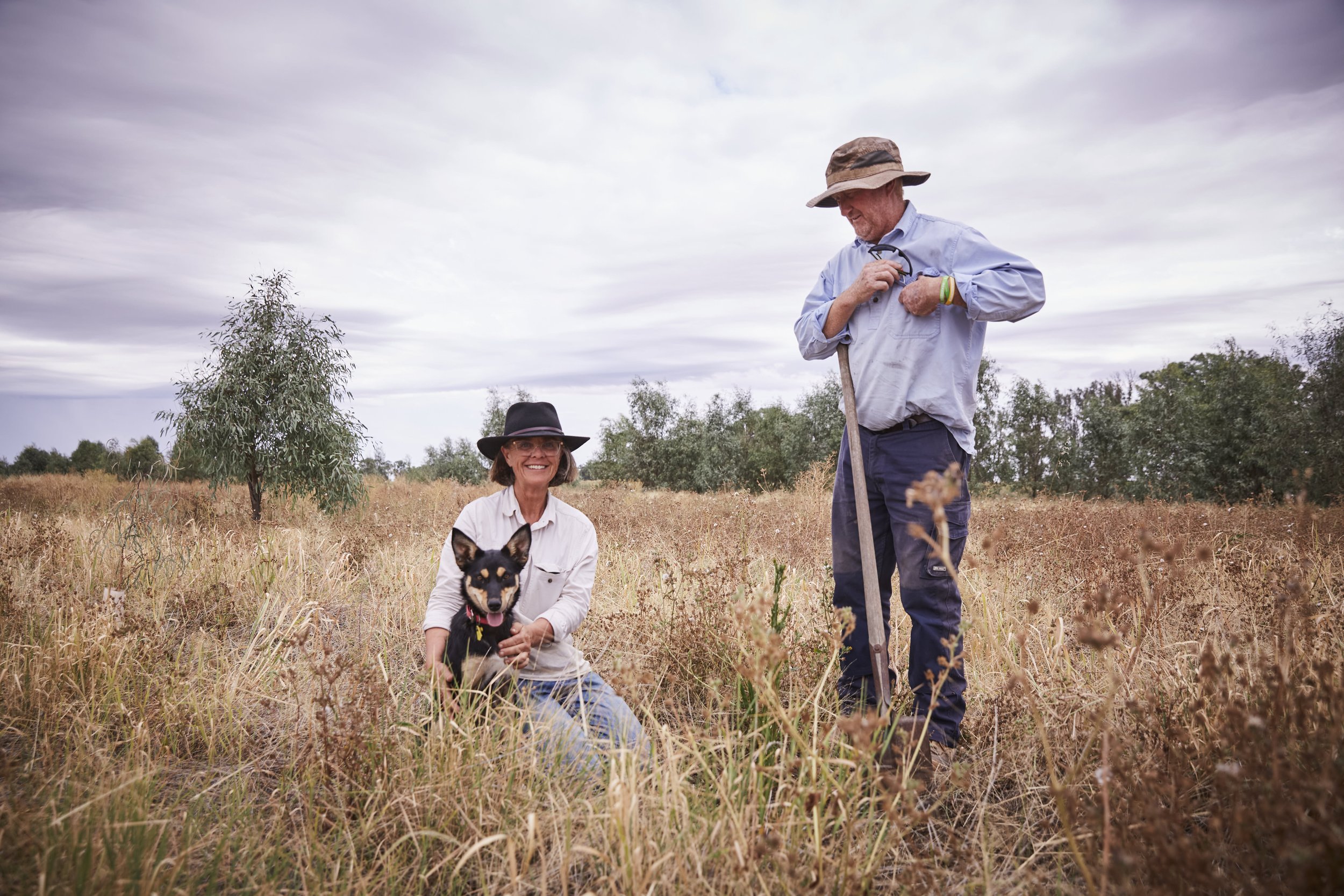
Jo and Greg Bear of Bear & Twigg
Greg and Jo Bear have worked closely with East Loddon over many years, united by a shared commitment to data-driven breeding and long-term genetic progress. What matters most to them is building a resilient, productive flock that balances commercial performance with animal welfare and care for the land.
1. Can you tell us a little about yourself and your journey into sheep farming?
With my husband Greg we have been running Merino sheep for over 30 years. Merino ewes have always been used but we have experimented with different rams, self replacing Merino and also terminal sires both for meat production (dorset ram) and maternal ewe production (using a border Leicester ram). Our farm is based on the Loddon River floodplains of Canary island Northern Victoria and over the past 20 years we have begun to appreciate the uniqueness of our environmental capital and now utilise our sheep to improve the diversity and health of our remnant native grasslands. We believe there is an exciting future in natural fibres like wool and a focus on environmental sustainability. Merino sheep are front and centre of this positive future.
2. You’ve been purchasing East Loddon ewes for a number of years, what initially drew you to their sheep and genetics?
We began buying East Loddon (EL) ewes in 2015 to be used in our 1st X ewe lamb enterprise. We were searching for a merino ewe that was easy care, robust, fertile and healthy. At this stage we were running sheep on lease country consisting of large paddocks and riverina type pasture. We needed a type of ewe that could easily graze and roam these tougher conditions. We also didn’t want to compromise on wool quality and still wanted an animal that could produce soft, good handling wool.
Over time, we were fortunate to purchase EL ewes each year and built a trusting and honest relationship with Tom and Sarah which is also very important to us.
3. What influenced your decision to introduce East Loddon rams for the first time this year?
Over the past 3 years we have shifted our thinking about wool and our business and believe that we need to become more professional and focused on wool growing and storytelling about wool as an effective crucial element in environmental sustainability.
I was fortunate to speak at Climate Week in New York 2024 to reps from fashion labels about the importance of wool in environmental sustainability and carbon markets. There was so much positivity and enthusiasm about wool by the fashion industry and I believe there is a lot of potential to market this sustainability impact. AWI have also introduced their Nature + program to further promote wool’s environmental credentials.
So as a business, Bear & Twigg are building a reputation of environmental sustainability that I believe we can springboard off in the next 10 years. To capitalise on these elements and extend our sustainability reputation we felt that we should undertake RWS certification which requires us to cease mulesing. Our certification and ceasing mulesing will start this year.
We believe that genetics is a crucial part in the decision to stop mulesing with the need to have a stud focused on breeding a plain bodied and plain breech merino but still maintain wool quality and handling. We also wanted a stud that has not been mulesing for a long time and so is committed to this focus and understands the challenges of changing a management plan to complement non-mulesed sheep and can provide solutions. Not only do we want a quick genetic gain for plain breech but we also were looking for support in how to manage this.
Tom and Sarah are passionate about wool and its future. They are also passionate about environmental sustainability and the benefits that strong robust merino sheep can provide in this environmental quest. They are leaders in the industry and willing to pivot and change if need be to ensure wool quality is maintained. We were looking for breeders who are leading the way in what wool can be in the future and Tom and Sarah demonstrate this.
In building a strong partnership, Tom is willing to class our young sheep to ensure that both businesses are clear on how our sheep are tracking and the quality of our wool. Our partnership is a natural progression of two businesses that align in many similar values and we can build on this opportunity.
We love EL sheep. Before they stopped mulesing we were impressed by the ewe’s resilience, longevity and fertility. And the wool handles all conditions and minimal risk of fly strike. It is soft handling and grows quickly allowing us to shift to 9 mth shearing. None of these qualities have altered since EL stopped mulesing.
4. What makes your sheep enterprise and environment unique where you operate?
The majority of our farm is on the Loddon River floodplains which includes remnant chenopod grassland and Black Box woody grasslands. Since the early 2000s we have focused on a low-input grazing system using Holistic grazing management as the backbone of our enterprise. This system revolves around grazing large numbers of sheep on a paddock for a short period of time, shifting the sheep on and then giving the paddock a long period of rest. This system has enabled us to effectively utilise our dryland landscape and build not only a profitable enterprise but also a focus on environmental sustainability and improved natural capital assets. We are now fortunate to have a number of projects with outside stakeholders who are assisting with our environmental gains. Our business is a win-win, we can improve our environment while being profitable. Our Merino sheep are the key cog in this system.
5. How have East Loddon genetics performed across your flock over time, particularly as conditions and management priorities have evolved?
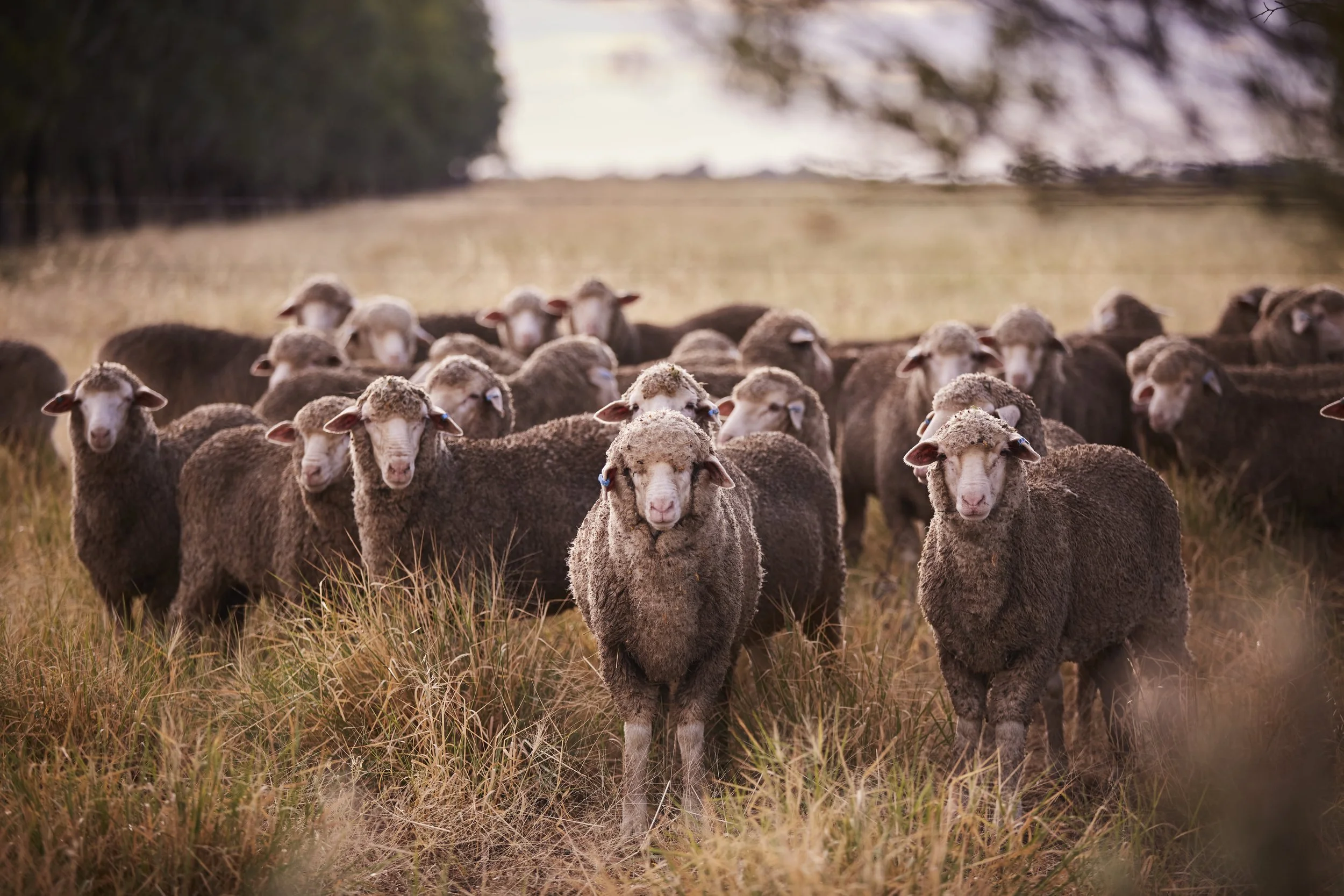
Since choosing EL sheep we have experienced floods, dry conditions. Paddock types constantly change; large crop stubbles to small irrigation clover paddocks. Remnant grasslands to dryland lucerne. And the EL sheep never miss a beat. They are extremely adaptable and we never notice any change in wool quality or fertility with new paddock conditions.
They are adaptable to troughs and robust for walking long distances. Feet are sound.
They are very effective foragers which is ideal in our native grasslands where we want them to graze all the plant species. We also noted that there appears to be little body strike evident in the EL ewes even with the wet conditions which is an indication of the health of the wool.
6. In what ways have you seen environmental fitness and adaptability contribute to the sustainability of your operation?
As mentioned the use of Holistic grazing techniques has enabled us to not only run a profitable sheep enterprise but also to kick goals with environmental performance. We believe that a farming business has to connect with the wider community and its concerns about the environment, sustainability and our future. Our sheep are the instigators of building stories about how our farm and business is improving the environment. With their adaptability and their robustness they can flourish in any environment. We don’t have to spend extra time or money ensuring they can survive in a different paddock. They just do. And wool is nature’s gift back to us.
7. You’ve both been involved in AWI projects around the carbon footprint of wool, how does breeding sheep that are fit for purpose play into reducing environmental impact?
Breeding sheep who can flourish in natural landscapes without being mulesed and also meeting other concerns from consumers is a beautiful story. A story we can reliably share with the world. And now with certification like RWS and natural capital accounting and other data monitoring services we can back up our claims with reliable and reputable data. We are not greenwashing.
8. How do East Loddon sheep align with your broader landcare and regenerative practices?
Our focus is on sustainability with substance – profit, the planet and people. So first and foremost we focus on having a profitable business while we look after our environmental assets and encourage people and partnerships to flourish.Our connection with EL is ticking all the 3 boxes. We are building a trusting and respectful collaboration with Tom and Sarah who share values of family, aiming for excellence and a love of farming. The EL sheep are easy care, efficient and robust and flourish in a low input system that builds profit and environmental capital
9. What outcomes have you observed in areas such as fertility, lamb survival, structure and overall flock robustness?
With our focus on a low input system we have a 5 week joining period in Summer. A tight joining pattern requires all ewes to be in good condition, healthy and resilient. Fortunately our EL ewes are fertile and we gain good reproductive figures from this tight joining pattern. Leading on from this period, we then have excellent lamb survival with the ewes showing excellent maternal traits.
Weaning is early and we have had no problems or checks with these lambs. The ewes also respond well to the early weaning and they quickly build condition.
10. From a business perspective, how have East Loddon sheep contributed, whether through efficiency, confidence in your system, or long-term returns?
We are very excited about the next 5-10 years in the wool industry and our increased focus on our wool enterprise. We are excited about working with Tom and Sarah and learning more from them about not only breeding but also marketing and their direction in the wool industry. We believe this is what a true Merino breeder should be offering – not only genetics but a solid focus on where the industry is moving to and how their sheep can fit into this new brave world.
With our landscape similar to the Riverina and our long-term experience with EL sheep, we have no concerns about the continued health and vigor of our EL bloodlines in our landscape. As our grasslands and environment improves from the grazing effectiveness, we expect to increase our carrying capacity which then allows us to use EL merinos even more. It becomes a lovely perpetuating cycle of diversity and productivity.
11. What advice would you give to producers considering a move toward non-mulesed systems and genetics that support that shift?
Connect with the breeder. Find out their goals, their why, their values.
It is so important to build a relationship first. Trust and knowledge sharing is so important when considering a change in a business. Any change requires the support and encouragement from other people and the breeder is the most important person to consult with when considering non mulesing.
12. How do you see genetics, environmental adaptability and responsible wool production shaping the future of sheep farming in your region?
After being at Climate Week I am convinced that responsible wool production, environmental sustainability and producing a natural fibre such as beautiful soft merino wool is the future. Not only for farming but also for fashion. As a farmer we must begin sharing the great things we do to the rest of the world. The story of a Merino ewe, the positive impact she does day in day out for the environment and then the beautiful gift of wool she provides for us is an incredible story.